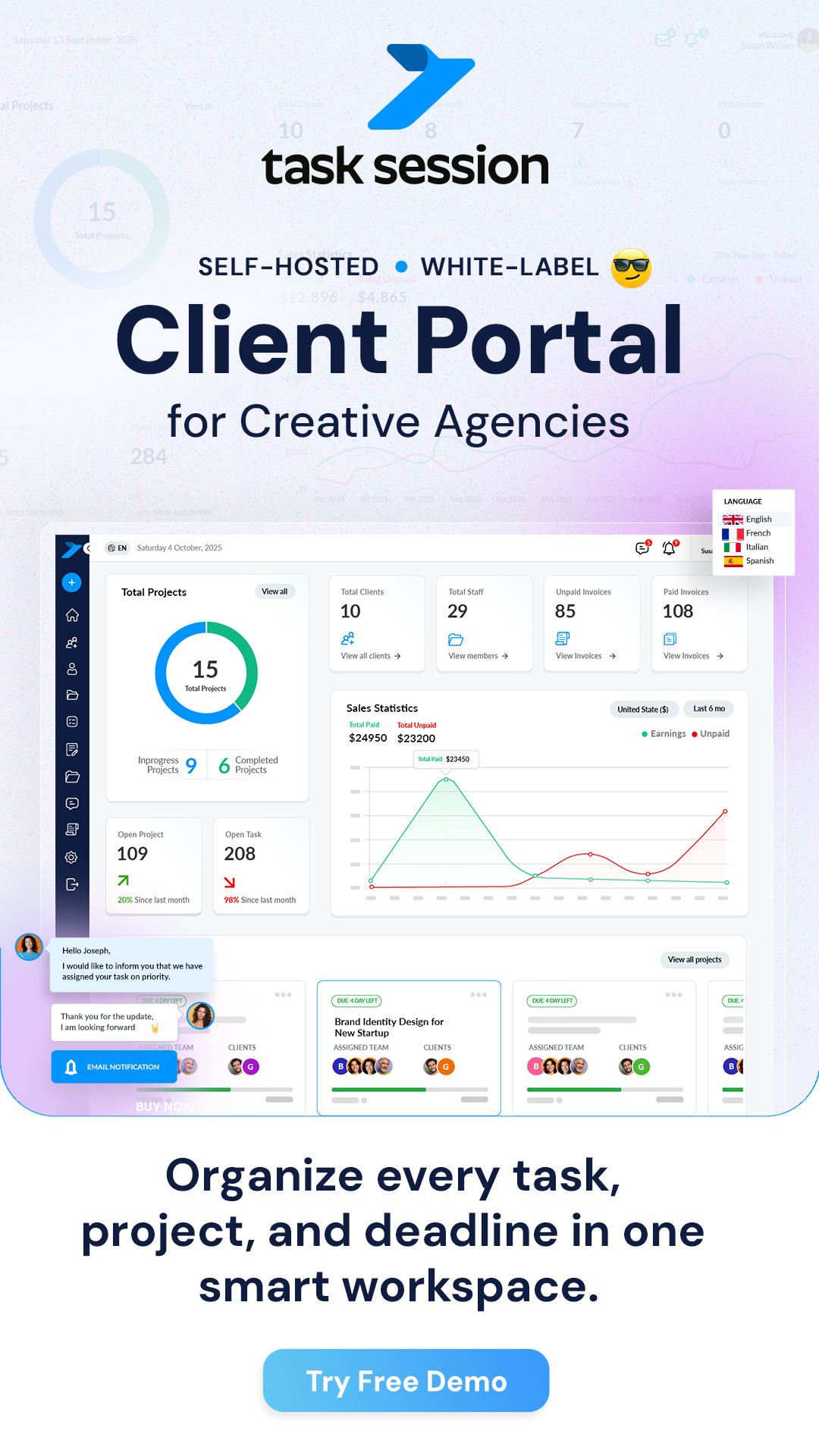
Task Session is a powerful self-hosted project management system that helps teams manage tasks, projects, and client relationships efficiently. This comprehensive guide will walk you through the complete installation process on your server.
System Overview
Task Session is a feature-rich project management system that includes:
- Project Management – Create and manage multiple projects
- Task Management – Kanban boards, task assignments, and tracking
- Client Portal – Dedicated client access and communication
- Team Collaboration – Real-time chat and file sharing
- Invoice Management – Create and manage invoices
- Payment Processing – Stripe, PayPal, and 2Checkout integration
- File Management – Google Drive integration and media vault
- Reporting Dashboard – Analytics and project insights
- Multi-language Support – English, Spanish, Italian, French
Server Requirements
Before installing Task Session, ensure your server meets these requirements:
PHP Requirements
- PHP Version: 8.0 or higher
- Memory Limit: 256MB minimum (512MB recommended)
- Max Execution Time: 300 seconds
- Upload Max Filesize: 50MB minimum
- Post Max Size: 50MB minimum
Required PHP Extensions
- MySQLi – Database connectivity
- PDO – Database abstraction layer
- cURL – HTTP requests and API calls
- OpenSSL – Secure connections
- MBString – Multibyte string handling
- iconv – Character encoding conversion
- IMAP – Email functionality
- GD – Image processing
- Zip – Archive handling
PHP Settings
- allow_url_fopen: Enabled
- file_uploads: Enabled
- session.auto_start: Disabled
Database Requirements
- MySQL: 8.0 or higher
- MariaDB: 10.2 or higher
- Database Size: 100MB minimum (1GB recommended)
Web Server Requirements
- Apache: 2.4 or higher (with mod_rewrite enabled)
- Nginx: 1.18 or higher
- SSL Certificate: Required for production
Pre-Installation Preparation
1. Download Task Session
- Download the latest version for account
- Extract the ZIP file to your local computer
- Verify all files are present in the extracted folder
2. Create Database
- Log in to your hosting control panel (cPanel, Plesk, etc.)
- Navigate to “MySQL Databases” or “Database Management”
- Create a new MySQL database
- Create a database user with full privileges
- Note down the database name, username, and password
3. Prepare Server Environment
- Ensure your domain has SSL certificate installed
- Check that all required PHP extensions are enabled
- Verify file permissions are set correctly (755 for directories, 644 for files)
Step 1: Upload Files
1. Upload via FTP/SFTP
- Connect to your server using an FTP client (FileZilla, WinSCP, etc.)
- Navigate to your domain’s public_html or www directory
- Upload all Task Session files maintaining the folder structure
- Ensure the
installfolder is uploaded correctly
2. Upload via cPanel File Manager
- Log in to your cPanel
- Open “File Manager”
- Navigate to public_html directory
- Upload the Task Session ZIP file
- Extract the ZIP file in the public_html directory
- Delete the ZIP file after extraction
3. Verify Upload
- Check that all folders are present:
admin,client,staff,includes,install - Verify the
installfolder contains:index.php,system.php,complete.php - Ensure file permissions are correct
Step 2: Database Setup
1. Access Installation Wizard
- Open your web browser
- Navigate to:
https://yourdomain.com/install/ - Replace “yourdomain.com” with your actual domain
- You should see the Task Session installation page
2. System Requirements Check
The installer will automatically check your server requirements:
- PHP version compatibility
- Required PHP extensions
- PHP settings configuration
- Directory permissions
If any requirements are missing, you’ll see error messages. Contact your hosting provider to enable missing extensions.
3. Database Configuration
Fill in the database connection details:
- Host Name: Usually “localhost” or your database server address
- Database User Name: The MySQL username you created
- Database Password: The password for your MySQL user
- Database Name: The MySQL database name you created
4. Test Database Connection
- Click “Test Connection” to verify your database credentials
- If successful, proceed to the next step
- If failed, double-check your database details
5. Create Database Tables
The installer will automatically:
- Create all necessary database tables
- Set up default data and configurations
- Create the initial database structure
- Generate the configuration file
Step 3: System Configuration
1. Basic System Settings
Configure your Task Session installation:
- System Title: Your company/project name
- System URL: Your domain URL (e.g., https://yourdomain.com)
- Admin Email: Primary administrator email
- Default Currency: USD, EUR, GBP, etc.
- Time Zone: Your local timezone
2. Email Configuration
Set up email settings for notifications:
- SMTP Host: Your email server (e.g., smtp.gmail.com)
- SMTP Port: Usually 587 for TLS or 465 for SSL
- SMTP Username: Your email address
- SMTP Password: Your email password or app password
- Encryption: TLS or SSL
3. Payment Gateway Setup (Optional)
Configure payment processing:
- Stripe: Add your Stripe API keys
- PayPal: Configure PayPal email and settings
- 2Checkout: Set up 2Checkout integration
Step 4: Admin Account Setup
1. Create Administrator Account
Set up your main administrator account:
- First Name: Your full name
- Email Address: Your email address
- Password: Strong password (minimum 8 characters)
- Account Type: Administrator
2. Account Verification
- Verify all information is correct
- Ensure email address is valid and accessible
- Choose a strong, unique password
- Save your login credentials securely
3. Complete Installation
- Review all settings before finalizing
- Click “Complete Installation” to finish setup
- Wait for the installation process to complete
- Note the success message and next steps
Step 5: Installation Complete
1. Installation Success
After successful installation, you’ll see:
- Installation complete confirmation
- Database tables created successfully
- Admin account created
- System ready for use
2. Security Reminder
Important: Remove the install folder immediately after installation:
- Delete the
/install/folder from your server - This prevents unauthorized access to the installer
- Keep a backup of installation files if needed
3. Access Your Dashboard
- Click “Login to Dashboard” button
- Use your admin credentials to log in
- You’ll be redirected to the main dashboard
Post-Installation Setup
1. Initial System Configuration
- Update Profile: Complete your admin profile
- System Settings: Configure general settings
- Email Templates: Customize email notifications
- Theme Settings: Choose your preferred theme
2. Create Your First Project
- Navigate to “Projects” section
- Click “Add New Project”
- Fill in project details
- Set project timeline and budget
- Assign team members if any
3. Add Team Members
- Go to “Members” section
- Click “Add Staff” or “Add Client”
- Fill in member details
- Set appropriate permissions
- Send invitation emails
4. Configure Integrations
- Google Drive: Set up file storage integration
- Payment Gateways: Configure payment processing
- Email Settings: Test email notifications
- API Keys: Set up third-party integrations
Troubleshooting
Common Installation Issues
“Database Connection Failed”
Problem: Cannot connect to MySQL database
Solutions:
- Verify database credentials are correct
- Check if MySQL service is running
- Ensure database user has proper permissions
- Try using “127.0.0.1” instead of “localhost”
“PHP Extensions Missing”
Problem: Required PHP extensions are not enabled
Solutions:
- Contact your hosting provider to enable missing extensions
- Check php.ini file for extension settings
- Restart web server after enabling extensions
“Permission Denied” Errors
Problem: File permission issues during installation
Solutions:
- Set correct file permissions (755 for directories, 644 for files)
- Ensure web server has write access to necessary folders
- Check ownership of files and directories
“Memory Limit Exceeded”
Problem: PHP memory limit is too low
Solutions:
- Increase PHP memory_limit in php.ini
- Contact hosting provider to increase limits
- Optimize server resources
Diagnostic Tools
Use the built-in diagnostic tool:
- Visit:
https://yourdomain.com/install/diagnose.php - Review the diagnostic report
- Check for any failed requirements
- Contact support if issues persist
Security Best Practices
1. File Security
- Remove install folder after installation
- Set proper file permissions (644 for files, 755 for directories)
- Protect sensitive files with .htaccess rules
- Regular backups of database and files
2. Database Security
- Use strong passwords for database users
- Limit database privileges to necessary operations only
- Regular database backups
- Monitor database access logs
3. Server Security
- Keep server software updated
- Use SSL certificates for all connections
- Configure firewall rules appropriately
- Regular security audits
4. Application Security
- Strong admin passwords
- Regular user access reviews
- Enable two-factor authentication if available
- Monitor system logs regularly
Maintenance and Updates
Regular Maintenance Tasks
- Database optimization – Run optimization queries monthly
- File cleanup – Remove temporary and log files
- Backup verification – Test backup restoration
- Security updates – Apply patches promptly
System Updates
- Check for updates regularly
- Test updates on staging environment first
- Backup before updates
- Document changes made during updates
Support and Documentation
Getting Help
- Official Documentation: Task Session Docs
- Community Support: Check forums and community
- Technical Support: Contact support team
- Video Tutorials: Watch installation videos
Additional Resources
- API Documentation: For custom integrations
- Theme Customization: UI/UX modifications
- Plugin Development: Extend functionality
- Migration Guides: Moving from other systems
Conclusion
Congratulations! You have successfully installed Task Session on your server. Your project management system is now ready to help you:
- Manage projects efficiently
- Collaborate with teams effectively
- Track tasks and deadlines accurately
- Handle client relationships professionally
- Process payments seamlessly
- Generate reports and analytics
Next Steps
- Explore the dashboard and familiarize yourself with features
- Create your first project and add team members
- Configure integrations like Google Drive and payment gateways
- Customize settings to match your workflow
- Train your team on using the system
Ready to get started? Log in to your dashboard and begin managing your projects with Task Session!