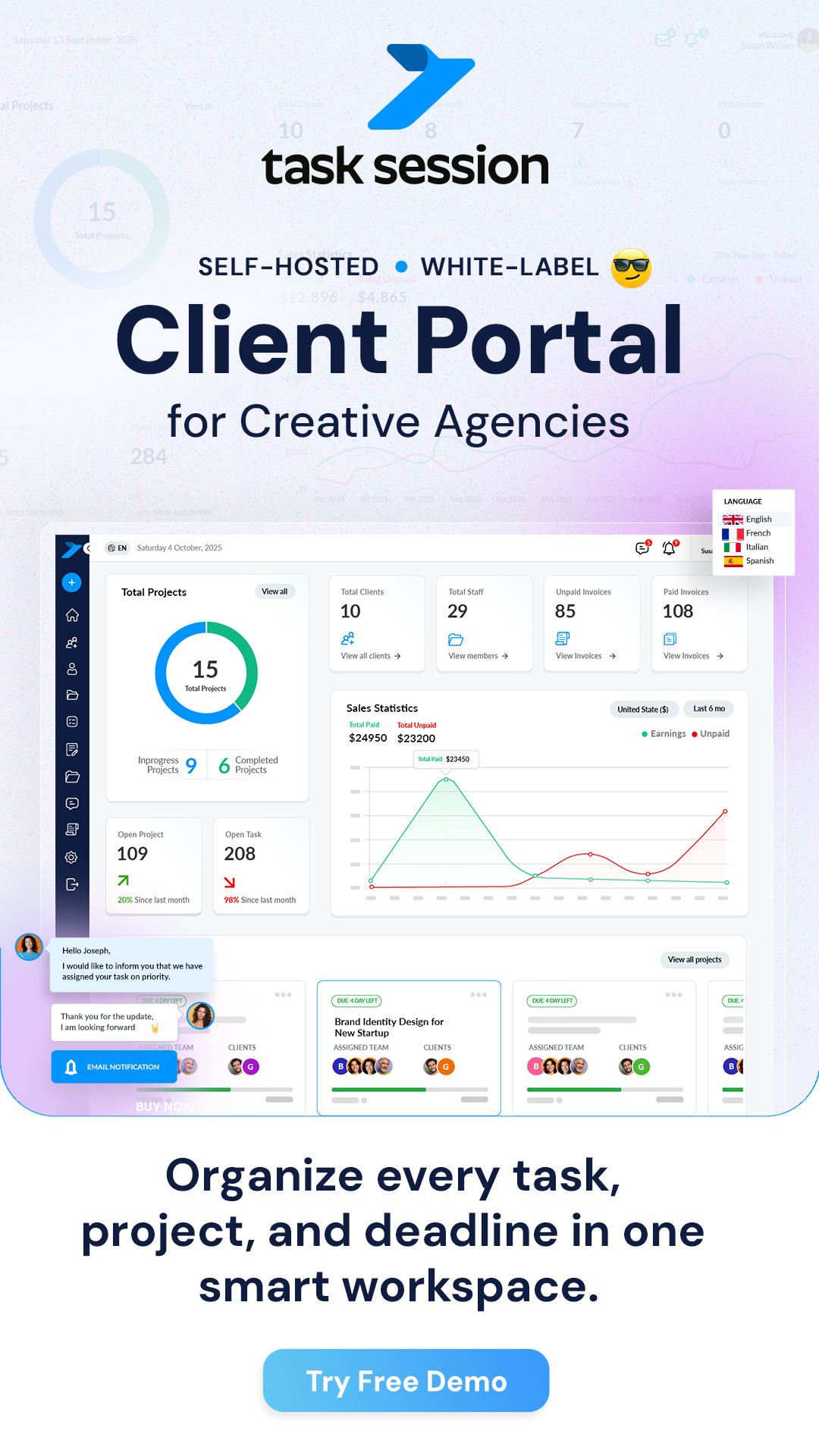
Task Session now supports Google OAuth 2.0 login, allowing users to sign in with their Google accounts for a seamless authentication experience. This comprehensive guide will walk you through the entire process of setting up Google Login with your Task Session installation.
Table of Contents
- Prerequisites
- Step 1: Create Google Cloud Project
- Step 2: Configure OAuth Consent Screen
- Step 3: Create OAuth 2.0 Credentials
- Step 4: Configure Task Session
- Step 5: Test Google Login
- Features & Benefits
- Registration Settings
- Troubleshooting
- Security Best Practices
Prerequisites
Before starting the Google Login setup, ensure you have:
- Task Session installed and running
- Admin access to your Task Session installation
- Google account with access to Google Cloud Console
- Domain with SSL certificate (HTTPS required for OAuth)
- PHP 8.0+ with cURL and OpenSSL extensions enabled
Step 1: Create Google Cloud Project
1. Visit Google Cloud Console
- Go to Google Cloud Console
- Sign in with your Google account
2. Create New Project
- Click on the project dropdown at the top
- Select “New Project”
- Enter project name:
Task Session Google Login - Choose your organization (if applicable)
- Click “Create”
3. Select Your Project
- Make sure your newly created project is selected
- You’ll see the project name in the top navigation bar
Step 2: Configure OAuth Consent Screen
1. Navigate to OAuth Consent Screen
- In the Google Cloud Console, go to “APIs & Services” > “OAuth consent screen”
- If this is your first time, you’ll need to configure it
2. Choose User Type
- Select “External” (unless you have a Google Workspace account)
- Click “Create”
3. Fill in App Information
- App name: Task Session Login (or your preferred name)
- User support email: Your email address
- App logo: (Optional) Upload your Task Session logo
- App domain: Your Task Session domain (e.g.,
portal.yourdomain.com) - Developer contact information: Your email address
- Click “Save and Continue”
4. Configure Scopes
- Click “Add or Remove Scopes”
- Add the following scopes:
openid– OpenID Connectemail– See your primary Google Account email addressprofile– See your personal info, including any personal info you’ve made publicly available
- Click “Update” then “Save and Continue”
5. Add Test Users (if in Testing mode)
- If your app is in “Testing” mode, add test user emails
- Only these users will be able to sign in until you publish the app
- Click “Save and Continue”
6. Review and Submit
- Review all the information
- Click “Back to Dashboard”
- If you want to publish immediately, click “Publish App” (for production use)
Step 3: Create OAuth 2.0 Credentials
1. Go to Credentials
- Navigate to “APIs & Services” > “Credentials”
- Click “Create Credentials” > “OAuth 2.0 Client IDs”
2. Configure OAuth Client
- Application type: Web application
- Name: Task Session Google Login
- Authorized redirect URIs:
https://yourdomain.com/vendor/google/g-login/auth/google_callback.php?? Important:- Replace
yourdomain.comwith your actual Task Session domain - The URL must use HTTPS (required for OAuth)
- Copy this exact URL from your Task Session admin panel (shown in the settings page)
- Replace
3. Create and Save Credentials
- Click “Create”
- A popup will appear with your credentials
- Copy the Client ID – You’ll need this immediately
- Copy the Client Secret – You’ll need this immediately
- Important: Save these credentials securely. The Client Secret will only be shown once!
- Click “OK” to close the popup
4. Verify Redirect URI
- In the credentials list, click on your newly created OAuth client
- Verify the redirect URI is exactly:
https://yourdomain.com/vendor/google/g-login/auth/google_callback.php - If you need to add multiple redirect URIs (for different environments), you can add them here
Step 4: Configure Task Session
1. Access Google Login Settings
- Log in to your Task Session admin panel
- Navigate to System Settings > Google Login
- Or directly visit:
https://yourdomain.com/admin/google-login.php
2. Enable Google Login
- Check the “Enable Google Login” toggle switch
- This activates the Google Login feature
3. Configure Registration Settings
- Allow New Registration via Google:
- Enabled: New users can create accounts by signing in with Google
- Disabled: Only existing users can login with Google (no new registrations)
- Choose the setting that fits your security requirements
4. Enter API Credentials
- Client ID: Paste your Google OAuth 2.0 Client ID
- Client Secret: Paste your Google OAuth 2.0 Client Secret
- Authorized redirect URI: This should auto-populate, but verify it matches your Google Cloud Console setting
5. Save Settings
- Click “Save Settings” button in the sidebar
- You should see a success message confirming the settings were saved
- The status section will update to show your configuration status
6. Verify Configuration
- Check the “Status” sidebar widget – all items should show green checkmarks:
- Client ID
- Client Secret
- Redirect URI
- Enabled
- If any item shows a red X, double-check your configuration
Step 5: Test Google Login
1. Test from Admin Panel
- In the Google Login settings page, click “Start Google Login” button in the sidebar
- This will open Google’s authorization page in a new tab
- Select a Google account to test with
- You should be redirected back to Task Session
2. Test from Login Page
- Go to your Task Session login page:
https://yourdomain.com/index.php - You should see a “Continue with Google” button below the login form
- Click the button
- Select your Google account
- Grant permissions if prompted
- You should be logged in and redirected to your dashboard
3. Verify User Creation/Login
- If registration is enabled: A new user account should be created
- If registration is disabled: Only existing users with matching emails can login
- Check the user’s account status and profile information
- Verify the user is redirected to the correct dashboard (Admin/Client/Staff)
Features & Benefits
Once successfully configured, Task Session’s Google Login provides:
Enhanced Authentication
- Single Sign-On (SSO): Users can sign in with their Google accounts
- No Password Management: Reduces password-related support requests
- Secure OAuth 2.0: Industry-standard authentication protocol
- Two-Factor Authentication: Leverages Google’s 2FA if enabled on user’s account
User Experience
- Quick Login: One-click authentication with Google
- Profile Sync: Automatically imports name and profile picture from Google
- Email Verification: Uses Google’s verified email addresses
- Seamless Integration: Works alongside traditional email/password login
Account Linking
- Existing Account Linking: Links Google accounts to existing Task Session accounts
- Multiple Auth Methods: Users can login with either Google or password
- Account Security: Prevents account takeover with proper validation
Admin Control
- Registration Control: Enable or disable new user registration via Google
- User Management: All Google-login users appear in your user list
- Account Status: New Google users are created as Client accounts by default
Registration Settings
Registration Enabled
When “Allow New Registration via Google” is enabled:
- New users can create accounts by signing in with Google
- Users are automatically created as Client accounts (accountStatus = 2)
- Profile information (name, email, picture) is imported from Google
- Email is automatically marked as verified
Registration Disabled
When “Allow New Registration via Google” is disabled:
- Only existing Task Session users can login with Google
- New Google sign-ins will show: “Account not found. Google registration is disabled.”
- Users must be created manually by an admin first
- Existing users can link their Google account for easier future logins
Account Linking Behavior
- If a user with the same email exists but uses password login, Google Login will automatically link the accounts
- After linking, the user can login with either Google or password
- The account’s
auth_provideris updated to “google”
Troubleshooting
Common Issues and Solutions
“OAuth configuration error”
Problem: Google Login settings page shows configuration error
Solution:
- Verify Client ID and Client Secret are correctly entered (no extra spaces)
- Ensure “Enable Google Login” toggle is checked
- Check that the redirect URI matches exactly in both Google Cloud and Task Session
- Clear browser cache and cookies
“Invalid OAuth state, please try again”
Problem: State parameter mismatch during OAuth flow
Solution:
- Clear all cookies for your domain
- Ensure your site uses HTTPS (required for OAuth cookies)
- Check that session cookies are working properly
- Try the login flow in an incognito/private browser window
“invalid_grant” Error
Problem: Token exchange fails with invalid_grant error
Solution:
- Verify Client ID and Client Secret match exactly in Google Cloud and Task Session
- Ensure the redirect URI is identical in both places (including trailing slashes)
- Clear all cookies and try a fresh login flow
- Check that authorization codes are not being reused (they’re single-use)
- Verify server clock is synchronized (NTP)
- Regenerate Client Secret in Google Cloud if needed, then update Task Session
“Account not found. Google registration is disabled”
Problem: User tries to login but account doesn’t exist
Solution:
- If you want to allow new registrations: Enable “Allow New Registration via Google” in settings
- If registration should be disabled: Create the user account manually first, then they can login with Google
- Verify the user’s email matches exactly in both systems
“Redirect URI mismatch”
Problem: Google shows redirect URI doesn’t match
Solution:
- Copy the exact redirect URI from Task Session admin panel
- Add it to Google Cloud Console ? Credentials ? OAuth 2.0 Client ? Authorized redirect URIs
- Ensure it uses HTTPS (not HTTP)
- Check for trailing slashes or path differences
- Wait a few minutes after adding the URI (Google may cache changes)
Google Sign-In Button Not Showing
Problem: “Continue with Google” button doesn’t appear on login page
Solution:
- Verify “Enable Google Login” is checked in admin settings
- Ensure Client ID and Client Secret are entered
- Check that the status shows all green checkmarks
- Clear browser cache
User Created but Can’t Access Dashboard
Problem: User logs in but gets redirected back to login page
Solution:
- Check the user’s
accountStatusin the database - Verify the user account is activated (status = 1)
- Check session configuration and cookie settings
- Review server error logs for session-related issues
Debug Tools
Task Session includes a debug page to help troubleshoot issues:
- Visit:
https://yourdomain.com/vendor/google/g-login/debug/status.php - This page shows:
- Configuration status
- Database settings
- Session and cookie information
- Server time and OpenSSL status
- Recent error logs
- Use this information to diagnose configuration problems
Security Best Practices
Credential Security
- Never share your Client ID and Client Secret publicly
- Store credentials securely in the database (Task Session does this automatically)
- Regular rotation of OAuth credentials (every 90 days recommended)
- Limit access to admin panel where credentials are stored
OAuth Security
- Use HTTPS only: OAuth requires secure connections
- Validate redirect URIs: Only allow your domain’s redirect URI
- State parameter: Task Session automatically uses CSRF protection via state parameter
- ID token validation: All tokens are validated before user creation/login
Account Security
- Registration control: Disable registration if you want manual account creation only
- Email verification: Google Login uses verified emails automatically
- Account linking: Existing accounts are properly linked to prevent duplicates
- Session security: Secure, HttpOnly cookies with SameSite protection
User Management
- Monitor new registrations: Review new Google-login users regularly
- Account status: New users are created as Clients by default
- Profile updates: User profiles are updated from Google on each login
- Access control: Use Task Session’s role-based access control (Admin/Client/Staff)
Advanced Configuration
Custom OAuth Scopes
Task Session uses the following OAuth scopes (configured automatically):
openid– OpenID Connect for authenticationemail– Access to user’s email addressprofile– Access to user’s basic profile information
These scopes are minimal and secure – only requesting necessary permissions.
Multiple Environments
To use Google Login in multiple environments (development, staging, production):
- Create separate OAuth clients in Google Cloud for each environment
- Add each environment’s redirect URI to the respective OAuth client
- Configure each Task Session installation with its corresponding credentials
- Use different Client IDs/secrets for each environment
Account Status Configuration
By default, new Google Login users are created with:
- accountStatus = 2 (Client account)
- This can be changed in the code if needed for your use case
- Admins can later change user roles as needed
Testing Checklist
After configuration, test the following scenarios:
- New user registration (if enabled): Sign in with a new Google account
- Existing user login: Sign in with Google using an existing Task Session email
- Account linking: Link Google to an existing password-based account
- Registration disabled: Verify new users see appropriate error message
- Dashboard redirect: Verify users are redirected to correct dashboard (Admin/Client/Staff)
- Profile sync: Check that name and profile picture are imported
- Session persistence: Verify login session persists across page reloads
- Logout: Test that logout works correctly
Conclusion
Configuring Google Login with Task Session provides a modern, secure authentication experience that:
- Improves user experience with one-click login
- Reduces password management overhead
- Enhances security with OAuth 2.0 and Google’s infrastructure
- Streamlines onboarding for new users (if registration enabled)
The setup process is straightforward and takes only a few minutes to complete. Once configured, your users will benefit from a seamless login experience.
Next Steps
After successful configuration:
- Test thoroughly with different user scenarios
- Train your team on the new Google Login feature
- Monitor user adoption and gather feedback
- Review security settings regularly
- Keep credentials updated and rotate them periodically
Support Resources
- Google OAuth 2.0 Documentation: https://developers.google.com/identity/protocols/oauth2
- Google Cloud Console: https://console.developers.google.com/